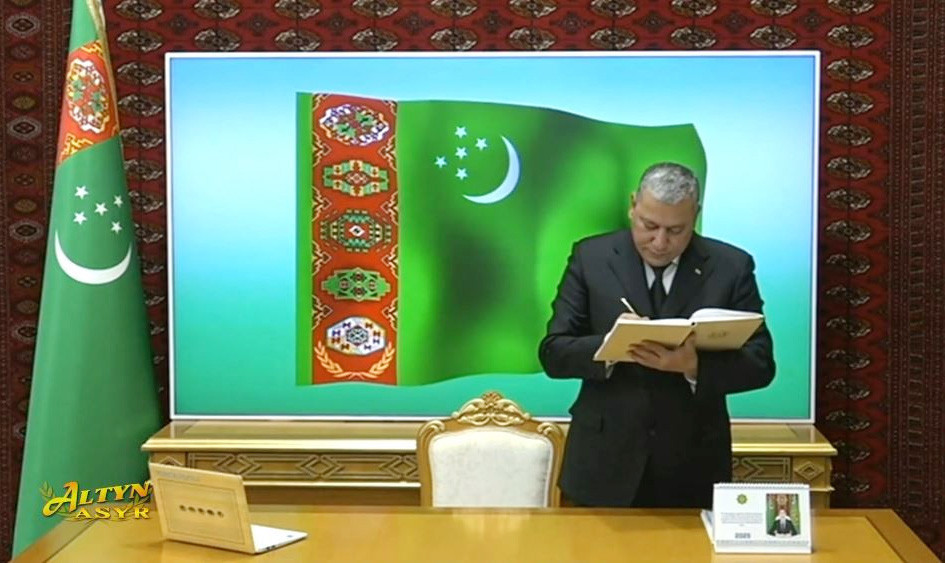




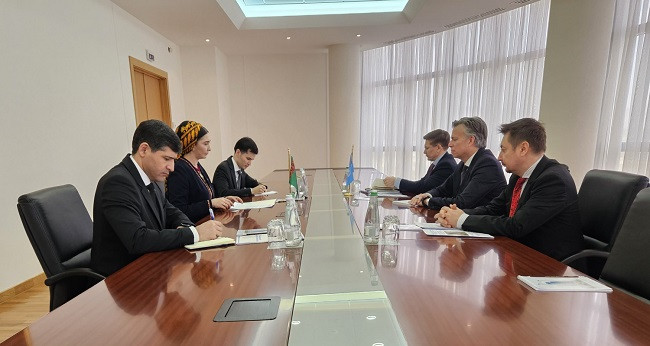
Preparations for the upcoming Global Methane Forum in Geneva in March were discussed on February 15 at a meeting at the Ministry of Foreign Affairs of Turkmenistan with the Director of the Sustainable Energy Department of the United Nations Economic Commission for Europe (UNECE) Dario Liguti, the website of the Turkmen Foreign Ministry reports.
During the meeting, Deputy Minister of Foreign Affairs of Turkmenistan Mahri Bashimova noted the participation of the Turkmen side, led by President Serdar Berdimuhamedov, at the Conference of the Parties to the UN Framework Convention on Climate Change COP-28 in Dubai and the accession of Turkmenistan to the Global Methane Commitment.
In this context, the parties touched upon the upcoming Global Methane Forum, which will be held in Geneva in March 2024, as well as the holding of a round table within the forum to discuss measures to reduce methane emissions in Central Asia, the Foreign Ministry notes.
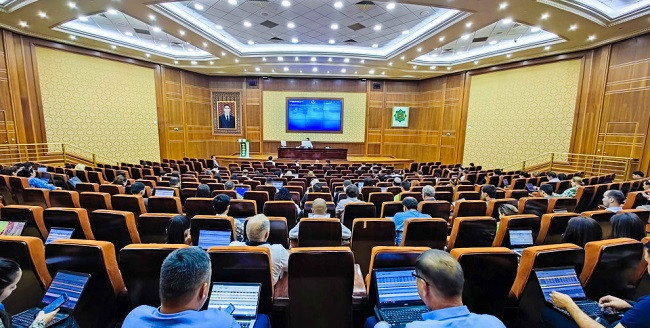
During the meeting, prospects for cooperation in the field of green energy, sustainable energy and reduction of methane emissions were also discussed and the results of the “Direct Conversation” meeting held the day before in Ashgabat: Synergy between renewable energy sources and natural gas in Turkmenistan were noted.
Attention was also paid to issues of interaction in terms of UNECE expert support in the field of solar and wind energy, as well as the development and implementation of advanced energy storage and transmission technologies.
It is worth noting that on December 1, 2023, President Serdar Berdimuhamedov at the COP28 climate summit in Dubai announced Turkmenistan’s accession to the Global Methane Commitment.
The head of state also noted that, taking into account the recommendations of the UN Framework Convention on Climate Change and with the support of the UN Development Program, Ashgabat prepared and in May 2022 approved Turkmenistan’s Nationally Determined Contribution to the Paris Climate Agreement, which provides for a reduction in greenhouse gas emissions by 20% in 2030 relative to the 2010 level.