

IV. Gas industry of Turkmenistan: from the past to the present
12:24 12.08.2024 29336
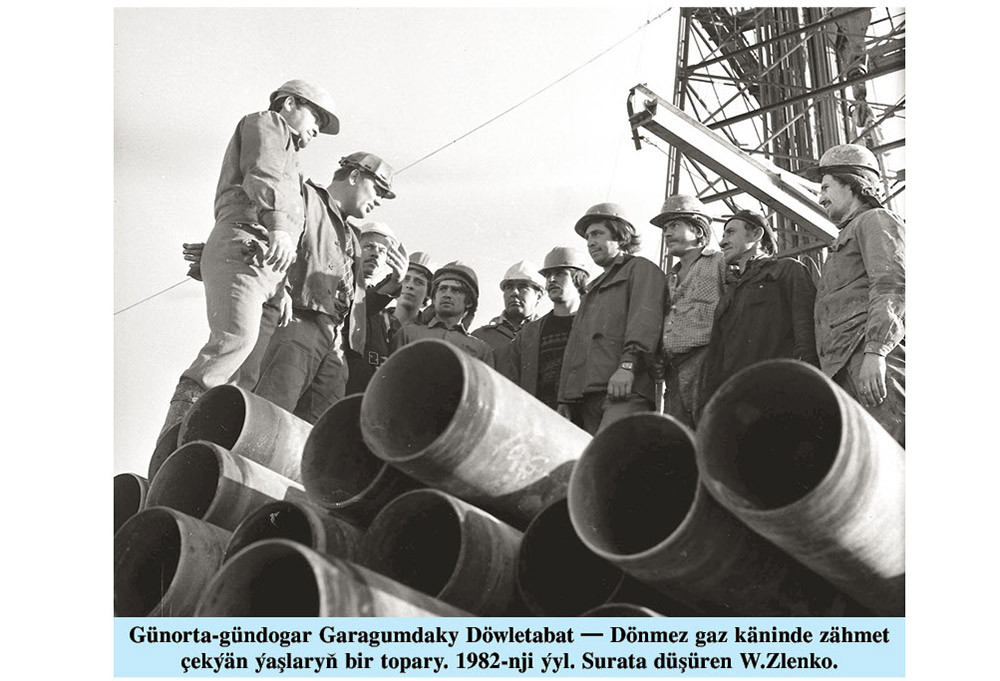
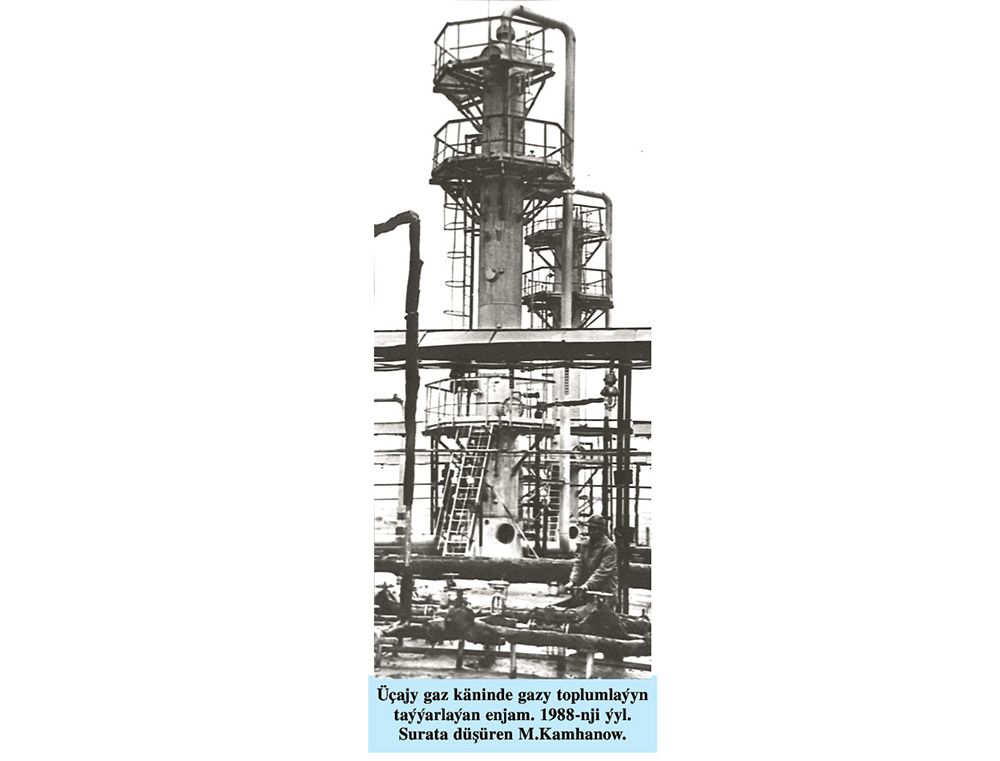
When the high efficiency of larger construction and installation work was proven at the Şatlyk gas condensate field, this method was also used at the Döwletabat-Donmez gas condensate field, which is one of the largest gas fields in terms of resources, as a result of which the field development time was reduced almost twofold, which certainly influenced the national economy. This production method was also used at the Üçajy, Seýrap, Malaý, 10 Years of Independence, Ýolguýi and other gas and gas condensate fields prepared for development.
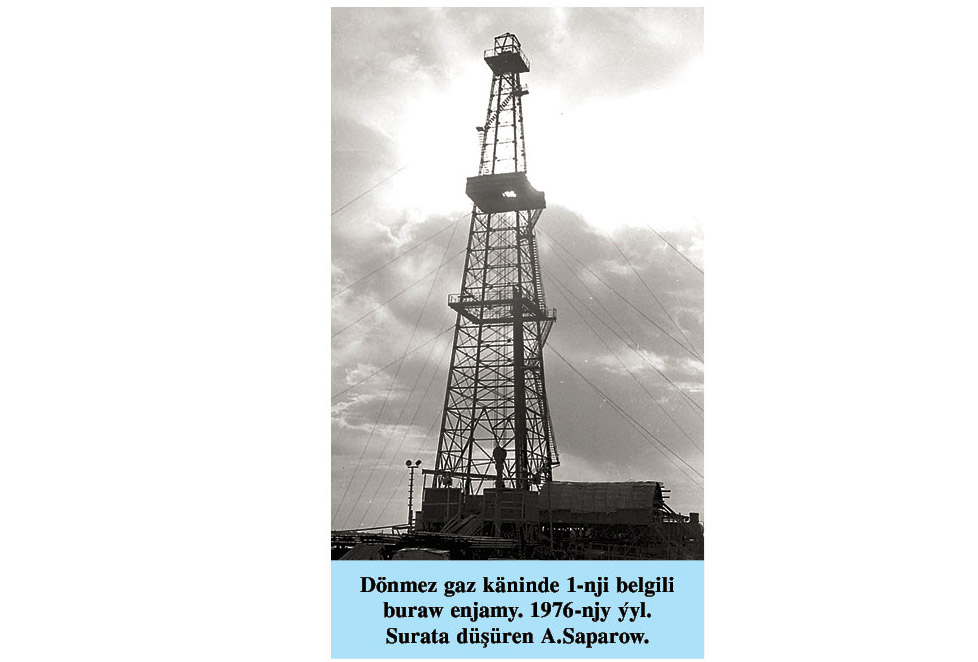
The Döwletabat gas condensate field was discovered in January 1974 with the receipt of industrially significant gas inflow as a result of experimental work from the measuring (parametric) well No. 1 at a depth of 2,292 meters. The structure of this field was revealed as a result of seismic exploration studies conducted in 1969–1971. The gas field tectonically belongs to the Gummezli- Döwletabat hemi-anticline and the Badhyz-Garabil monoclinal fold.
To prepare the field for industrial exploitation, exploratory wells were drilled and deposits of the Neogene-Quaternary, Paleogene, Cretaceous, Upper Jurassic and Permian-Triassic periods were discovered.
The Döwletabat-Donmez field conditionally consists of three geologically related parts: Döwletabat-1, Döwletabat-2 and Döwletabat-3. These deposits were put into operation in 1982, 1984 and 1988, respectively, with wells placed according to the block system.
The Döwletabat-Donmez gas condensate field is located in the south-eastern part of Turkmenistan in the territory of the Sarahs etrap of the Ahal velayat and the Yoloten etrap of the Mary velayat. The city of Sarahs is located in the north-west of the field, with which it is connected by an asphalt road 18 kilometers. The nearest large settlement, the town of Tejen, is located 125 km in the north-west of the field, 100 km north of the city is the Şatlyk field, 50 km to the north-east is the Galkynyş field and 40 km to the south-east is the Gurrukbil gas condensate field.
In terms of orography, the region includes the north-western part of the Badhyz elevation, the eastern part of the Kopetdag Mountains and part of the hilly upland that turns into the Karakum Plain.
The relief of the region mainly consists of flat areas; in the south of the field, there are hills with a height difference of 100 meters, and in the north-east, there are rows of sand dunes.
In the southeastern part of this area, there are low ridges of Garanymbaýyr and Kesikburun and the Gummezli, Hangyry and Adjarly elevations of +475 +653 meters, which stand out among other elevations. In the north-west, in the area of the Hor-Hor reservoir, the terrain is somewhat leveled.
The field is distinguished by the complexity of the geological section of the developed productive layer (bed).
Part of the Döwletabat-1 field is located in the sulfur-free zone and contains gas condensate. There are three process units operating there, the capacity of each is 5 million cubic meters a day. Gas from Döwletabat -1 from the PGTU (preliminary gas treatment unit) is fed to the gas compressor unit (GCU), located in the Döwletabat-2 part. Then the gas is sent to the BCU-2 (booster compressor unit) inlet, where it undergoes complete purification and drying.
There are four PGTUs (Nos. 2, 3, 5 and 8) operating at Döwletabat-2. According to the design, the throughput capacity of each of them is 5 billion cubic meters a year. Their total capacity is 20 billion cubic meters of gas a year.
There are four PGTUs (Nos. 1, 4, 7 and 9) operating at Döwletabat-3. According to the design, the capacity of each of them is 5 billion cubic meters, in total – 20 billion a year. Main unit No. 2 with a design capacity of 20 billion cubic meters of tank gas a year is located in the sulfur part of the Döwletabat gas condensate field. Main unit No. 2 of the Döwletabat-3 unit purifies gas from PGTUs Nos. 1, 4, 7 and 9 and from the Gurrukbil field. A total of four desulphurization units are in operation.
Oraznazar HESHDEKOV

Drillers of the Lebapnebitgazgözleg Expedition Are Successfully Drilling New Deep Wells
Workers of the Lebapnebitgazgözleg Expedition of the Türkmengeologiýa State Corporation take an active part in the work to increase the economic potential of the Motherland. In the year “Happy Youth with Arkadag Serdar”, they continue to successfully achieve their goals and are rapidly moving to new heights.

Another Well Has Been Put into Operation at the Galkynysh Field
Another gas well has been put into operation at the Galkynyş gas field, which is one of the largest natural gas deposits in the world. Thus, the number of productive gas wells at plant No. 1 for purifying gas from sulfur at the giant field has reached thirty. Work on the construction of the wellhead of gas well No. 238 was carried out by builders of the 3rd specialized installation organization of the directorate of the Türkmenýöritenebitgazgurnama Trust as a general contractor by order of the Marygazçykaryş Directorate of the Türkmengaz State Concern.

Gas Workers of the Daşoguzşähergaz Gas Supply Organization Are Ready for the Winter Season
Workers and specialists of gas supply organizations of the Daşoguzgazüpjünçilik Directorate continue to carry out work for the autumn-winter season at a high organizational level. In this regard, the work of the gas workers of the Daşoguzşähergaz Gas Supply Organization, located in the velayat center, to ensure an uninterrupted supply of natural gas to the population, organizations and enterprises of the city should be especially noted.

The Hard Work of Masters of Their Craft Is Repaid a Hundredfold
“Staying in the beautiful capital of our country and meeting with leading colleagues brought me vivid and indelible impressions. And when I was presented with a state decoration at the award ceremony in a solemn atmosphere, I experienced a feeling of immense joy. Taking advantage of this opportunity, I expressed my sincere gratitude to our esteemed President, showing tireless care for those who work for the prosperity of our homeland,” Hudayberen Allamuradov says, touchingly recalling the significant and exciting events.

The Next Batch of New Machinery Received by the Nebitgazçykaryş Trust of the Türkmennebit State Concern
In accordance with the Program of the development of the oil and gas industry of Turkmenistan for the period until 2030, the Türkmennebit State Concern, which is the country’s leading producer of “black gold”, carries out on a wide scale geological exploration, drilling work and major repairs of wells. In this regard, high-performance machinery, purchased thanks to the support of the respected President, Hero of Turkmenistan Serdar Berdimuhamedov, is a great help for the efficient activities of oil workers and their achievement of new production heights.