



Energy prosperity in a peaceful land
21:26 09.12.2025 2966
Energy resources, one of the most important pillars of global development, serve as a vital source for the economic development of modern society, the expansion of production, technological advancement and improved living standards. Energy consumption is not only a vital necessity, but it is also directly linked to climate processes, which play an important role in the natural sciences. Therefore, an increase or change in global demand has a significant impact on the global heat balance.
It is important to analyze this relationship not only from an economic perspective, but also holistically, taking into account physical, biological and environmental factors. Climate change in the modern world has become one of the most pressing security issues for humanity. Due to increased sulfur dioxide emissions, caused by heat retention in the atmosphere, global warming is intensifying, significantly impacting ecosystems, the economy and human health. Rational, economical and environmentally safe use of energy resources is considered one of the key areas of sustainable development worldwide.
Currently, environmental laboratories throughout the world and in our country are analyzing the causes of rising air temperatures, measures taken in the energy sector to reduce them and future goals.
According to environmentalists, the accumulation of large amounts of sulfur gases such as CO₂, CH₂ and N₂O in the atmosphere leads to an increase in overall air temperature due to the heating of the Earth by solar thermal radiation. The albedo of the Earth’s surface, or its ability to reflect incident sunlight, is one of the factors determining cooling or warming. The widespread use of fuels such as coal, oil and natural gas in industry, transportation and power plants leads to increased carbon dioxide (CO₂) emissions globally. Thus, much of this energy is wasted. This leads to additional energy production and, consequently, an increase in costly and environmentally harmful activities. Energy recovery efforts are being undertaken worldwide to protect and restore terrestrial ecosystems, to promote their sustainable use, to manage forests, to combat desertification and to prevent land degradation and biodiversity loss.
Among the successful discoveries in semiconductor physics is the generation of electricity from solar energy using solar panels. In biology, the study of biomass – that is, the study of renewable energy sources for the production of heat, electricity and biofuels – went down in history as one of the greatest achievements of the 20th century for the benefit of humanity. In addition, the industrialization of wind energy and geothermal resources is one of the greatest achievements in preserving biodiversity.
Currently, as a result of the implementation of comprehensive programs in our country and around the world, improved thermal insulation of industrial, residential and public buildings and the use of LED lighting systems and smart energy systems are reducing energy consumption. In recent years, many countries have adopted national strategic programs aimed at implementing green energy policies and reducing carbon dioxide emissions. This is creating intense competition among nations around the world in the creation of environmentally friendly products.
Extensive work is being done to protect the environment and to develop comprehensive action plans for the future. Leading countries around the world are undertaking large-scale efforts to protect the environment and to develop comprehensive action plans by building smart cities, transitioning to electric vehicles, widely deploying energy-saving batteries and nanotechnology and widely introducing carbon-neutral production systems. Improving public environmental awareness plays a key role in combating climate change. The European Union has currently adopted a National Program for a Carbon-Free Economy through 2050. The People’s Republic of China, the world’s largest manufacturer of solar panels and wind turbines, aims to achieve carbon neutrality by 2060. The United States has invested billions of dollars in green infrastructure.
In recent years, solar panels have been installed in many residential buildings and farms across our country. Solar energy monitoring stations are in operation in Ashgabat and the Mary and Balkan velayats. The efforts of the head of state are creating various investment opportunities for new solar energy projects. In particular, Turkmenistan has particularly promising areas along the Caspian Sea coast, at the foot of the Balkhan Mountains and in some parts of the Karakum Desert, where high wind speeds throughout the year create significant opportunities for energy production.
Turkmenistan is implementing national programs to expand green spaces, to conserve water resources and to combat desertification. Future plans include the comprehensive construction of large solar power plants and wind turbines, a transition to electric transport and the production of hydrogen energy.
Patma AGAGELDIYEVA,
a teacher at
Magtymguly TSU

Turkmen gas is also needed to fill the SGC gas pipeline, - expert
- It is very difficult to fill the Southern Gas Corridor (SGC) with Azerbaijani gas alone; gas from Turkmenistan is also needed. - This was stated by Julian Bowden, a senior researcher at the Oxford Institute for Energy Studies (OIES), Trend reports.
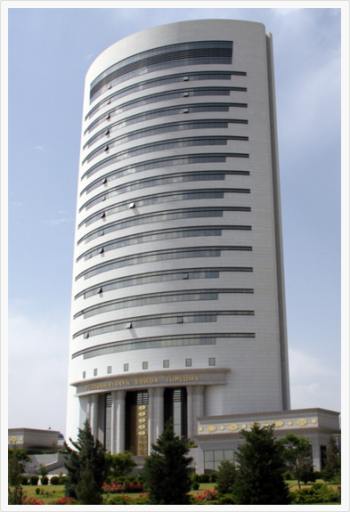
Turkish and Afghan businessmen purchased liquefied gas and jet fuel at exchange trades
11 transactions were registered at the State Commodity and Raw Materials Exchange of Turkmenistan last week.
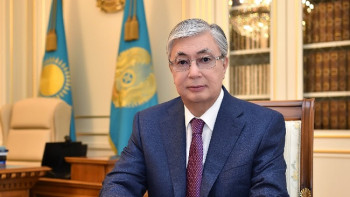
The President of Kazakhstan confirmed his participation in the international peace forum in Ashgabat
The President of Kazakhstan Kassym-Jomart Tokayev confirmed his participation in the International Peace and Trust Forum, which is scheduled to be held on December 12 in Ashgabat. The head of Kazakhstan wrote about this in a letter addressed to the Chairman of the Halk Maslahaty Gurbanguly Berdimuhamedov.

OPEC+ countries decided to increase oil production quotas in September by 100,000 b/d
OPEC+ ministers decided to increase oil production quotas in September by 100,000 barrels per day, Interfax reported on Wednesday, citing a source in one of the delegations.

Turkmenistan and the Cooperation Council for the Arab States of the Persian Gulf signed a memorandum of cooperation
Prospects for further development of relations between Turkmenistan and the Cooperation Council for the Arab States of the Persian Gulf were discussed at the meeting of Vice-Chairman, Minister of Foreign Affairs of Turkmenistan Rashid Meredov with the Secretary General of this organization Naif Falah Mubarak Al-Hajraf, the website of the Foreign Ministry of Turkmenistan reports.