




The Future of Geothermal Energy
07:14 26.07.2025 3284
Turkmenistan has huge resources of natural gas, which provide a significant export potential. However, in the context of the global energy transition and the desire to diversify national energy balances, interest in green energy is growing. Geothermal energy occupies a special place among them. Geothermal energy is heat that is generated and accumulated in the bowels of the Earth.
World experience shows the high efficiency and sustainability of geothermal projects and also confirms the economic feasibility of using the deep heat of the Earth. For example, Iceland is one of the world leaders in the share of geothermal energy in the national energy balance. More than 90% of thermal energy and 30% of electricity in the country are generated by geothermal sources. Large facilities such as the Hellisheidi geothermal power plant, using binary circulation systems and steam plants, produce 300 MW of electricity and 400 MW of thermal energy. Iceland’s success is conditioned by favorable geological conditions, namely the presence of a large number of geysers on its territory.
The Mak-Ban station, one of the largest geothermal power plants in the world with a capacity of 1900 MW, is located in the Philippines. The country is rich in active volcanoes. The experience of the Philippines shows the possibility of the widespread use of geothermal heat from volcanoes in a seismically active region.
The Geysers complex in California, USA, is the world’s largest dry steam geothermal field. It consists of several geothermal power plants that use hot dry steam extracted from the bowels of the Earth to generate electricity. Its capacity is more than 900 MW. This project shows that large geothermal fields can be exploited for decades.
Turkmenistan has important conditions for the development of green energy sources, such as solar, wind and geothermal energy.
Geothermal energy is one of the most promising sources. In some regions of the country, there are geothermal anomalies, where the heat of the earth can be used to generate electricity or heat. This method requires more in-depth research and can become a valuable addition to the energy balance of our country.
Geothermal activity in Turkmenistan is associated with the location of the Alpine-Himalayan tectonic belt and the Caspian region in the tectonic zone. The Caspian depression and the Cheleken region are characterized by the presence of deep sedimentary basins with high geothermal gradients, which can form at significant depths. Hot water outlets in the Cheleken region indicate the proximity of geothermal reservoirs.
Geological faults in the tectonic structures of the Kopetdag Plateau and the Northern Karakum Dome facilitate the circulation of deep fluids and heat transfer to the surface. In these regions, geothermal gradients can reach temperatures of 30-40 °C and more per kilometer. This is a good indicator for the use of geothermal energy. At a depth of 1-5 kilometers, the temperature of geothermal waters can vary from 50 °C to 150 °C. The above data allow us to consider low- and medium-temperature sources. The development of geothermal energy is based on several important technologies. The possibility of their use in Turkmenistan depends on the nature of the sources. Low-temperature sources allow the heat to be used directly. Geothermal waters with temperatures up to 100 °C are used for heating residential buildings and greenhouses and for drying crops in agriculture.
Binary-cycle geothermal power plants are built to use sources with an average temperature of 120 °C. Medium-temperature geothermal waters are mainly used to heat fast-evaporating isopentane or isobutane fluids used to drive turbines. Binary cycle systems will generate electricity and reduce the use of gas-fired power plants.
Thus, the integration of geothermal energy into the energy sector of Turkmenistan has a number of strategic advantages. Unlike solar and wind energy, geothermal power plants can provide a stable supply of energy regardless of weather conditions and time of day.
Substituting a part of domestic natural gas consumption with geothermal energy will lead to an increase in additional volumes of natural gas for export. The development of the geothermal sector will stimulate the creation of specialized enterprises, the attraction of highly qualified personnel and the improvement of drilling, geology and engineering technologies. This will also make a significant contribution to achieving national goals to reduce greenhouse gas emissions.
Thus, despite the initial costs and technical difficulties, the strategic advantages and long-term benefits of using geothermal energy, based on global experience, make geothermal energy a promising direction for the development of sustainable energy in Turkmenistan today.
Chynar GELDIYEVA,
a senior scientific worker at the Natural Gas Research Institute, Türkmengaz State Concern

According to the results of the first half of the year, oil production at the Goturdepe field increased by 10%
The state concern “Turkmennebit” increased oil production by 10% at the Goturdepe field in the first six months of this year, bringing this figure to more than half a million tons of “black gold”. At the same time, 10 thousand 125 tons of oil were produced in excess of the plan.

Ashgabat will host the 15th Economic Cooperation Organization Summit on November 28
Vice-Chairman of the Cabinet of Ministers of Turkmenistan Serdar Berdimuhamedov reported on preparations for the XV Summit of the Economic Cooperation Organization (ECO) during a working meeting chaired by President Gurbanguly Berdimuhamedov on Monday.
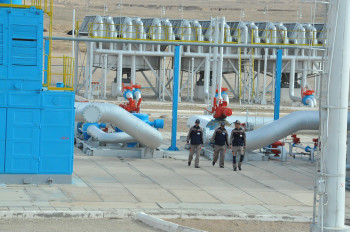
Oil production increased at Goturdepe field using gas lift method
Oil workers of Turkmenistan are facing important tasks, the implementation of which is aimed at reaching new milestones. Employees of Goturdepe department of the State Concern “Turkmennebit” work effectively and achieve high results.

Turkey to start using its own natural gas in 2023
From March 2023, Turkey plans to start using its own natural gas. This was stated by the Minister of Energy and Natural Resources of Turkey Fatih Donmez, Trend reports.
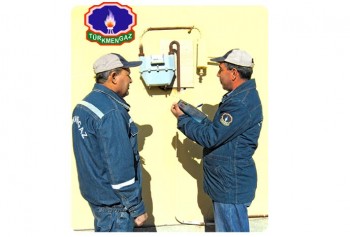
Gas workers of Dashoguz region continue preparations for the autumn-winter period
The gas workers of the gas economic organization "Dashoguzshahergaz" of the "Dashoguzgazupjunchilik" department are approaching the day of celebration of the 31st anniversary of the independence of Turkmenistan with impressive labor achievements. For 8 months of this year, the employees of the enterprise managed to ensure the stable operation of a single gas system of various pressures with a length of about 550 km, as well as the well-coordinated work of 445 units of gas distribution and gas control equipment.