


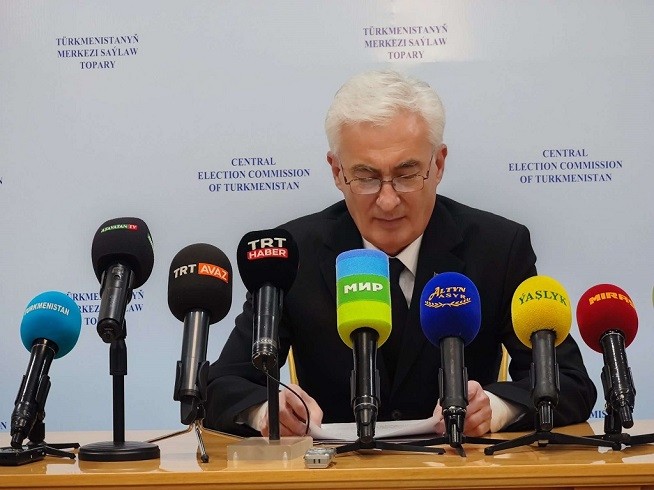
The final results of the nationwide elections of deputies of the Mejlis, members of the halk maslahaty and Gengeshes, held on March 26, were summed up on Wednesday at a meeting of the Central Commission for Elections and Referendums in Turkmenistan (CEC), TDH reports.
During the meeting, it was noted that according to the CEC, 91.12% of citizens of Turkmenistan who have the right to vote voted in the elections. In all electoral districts, two or more candidates ran for one mandate.
Among the elected deputies of the Mejlis, members of the Halk Maslahaty and Gengeshes, there are 3,320 representatives of the Democratic Party, 304 of the Party of Industrialists and Entrepreneurs, 1,513 of the Agrarian Party, and 2,085 from groups of citizens.
Voting was conducted at 2602 polling stations of the country and at 42 polling stations at the embassies and consular offices of Turkmenistan abroad.
As noted, a characteristic feature of the elections was the high activity of voters both during the election campaign and on voting day. The high educational and professional level of the people's representatives, represented by Turkmen citizens of various nationalities, was also noted. Among them are employees of state institutions, leading specialists in the sectors of the economy, education and science, culture and art, and agriculture. The increase in the participation of women in the political life of the country was especially noted.
The meeting participants stated that the elections were held in an organized manner, in accordance with the legislation in force in the country and generally accepted norms of international law.
The three-month marathon of the election campaign was followed by foreign observers and experts – representatives of the Observer Mission from the CIS, the OSCE Office for Democratic Institutions and Human Rights, the Shanghai Cooperation Organization, the Organization of Turkic States, the Organization of Islamic Cooperation.
Full monitoring of all stages of the electoral process was carried out by about 3 thousand national observers, including representatives of political parties, public organizations and associations, groups of citizens who confirmed that the elections were held at a high organizational level, without significant violations.